


World Alzheimer’s Day. Alzheimer’s affects millions of families, learning its signs, understanding how to reduce risks and knowing how to help empowers us, this September twenty first we share clear and trustworthy guidance to care for yourself and your loved ones.
What Alzheimer’s is and why it is observed
Alzheimer’s disease is a neurodegenerative illness and the most common cause of dementia. It leads to progressive changes in memory, thinking and behavior, it is not a normal part of aging. Its impact reaches the person, the family and the community, which is why offering information, respect and timely support is essential. Every September twenty first, communities raise awareness and promote informed action, with the goal of reducing stigma and bringing diagnosis, treatment and support closer to everyone.
Prevention and risk reduction, what we can do now?
Prevention does not mean having all the answers today, it means caring for your health day by day with small and big changes. Brain health grows stronger when you move regularly, control blood pressure, prevent and manage diabetes, address hearing loss and use hearing aids when appropriate, avoid smoking, limit alcohol, keep a healthy weight, sleep well and follow a Mediterranean style eating pattern rich in fruits, vegetables, whole grains and olive oil. It also helps to keep your mind active and to nurture social connections. Visiting your doctor for routine checkups, reviewing memory concerns and adjusting treatments when needed is an essential part of prevention. Taking care of these factors over the life course is linked with a lower risk of cognitive decline and dementia.
If you are in Tampa or Brandon, you can book an appointment or request a free tour at our clinics to learn about the premium services we offer.
Early warning signs, when to seek care | World Alzheimer’s Day
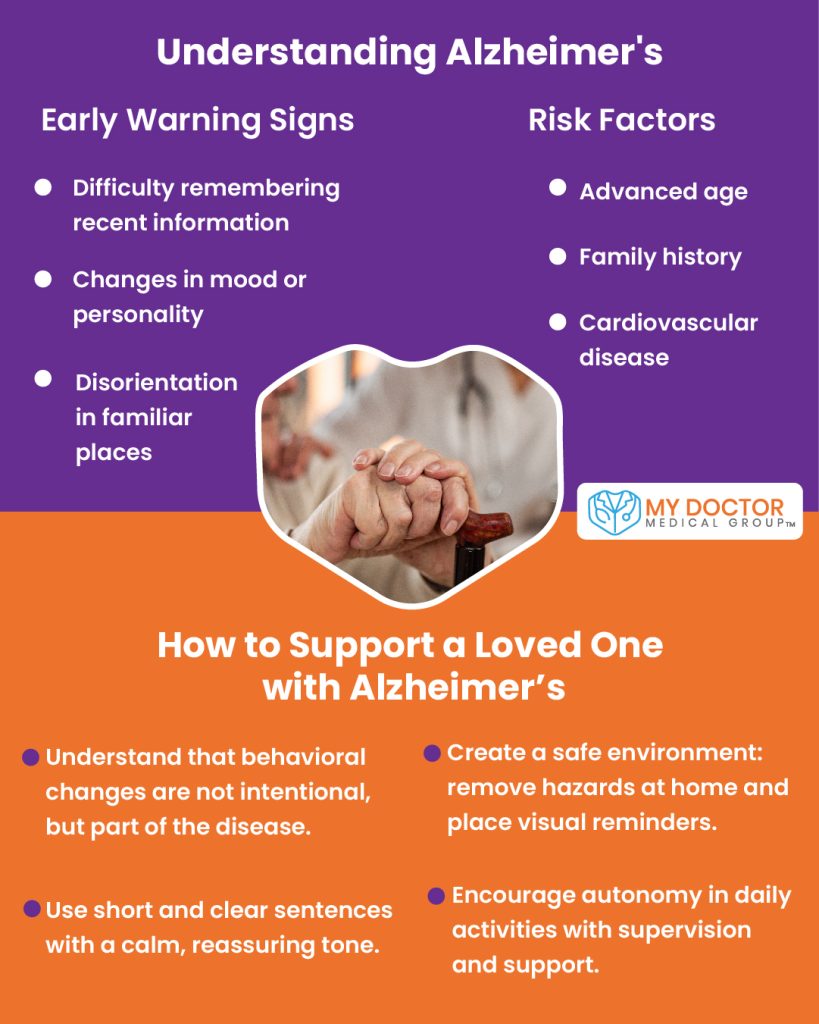
Being attentive to our cognitive health is an act of self care. Watch calmly for changes that interfere with daily life, frequent forgetting of appointments or bills, increased difficulty planning or solving problems, problems completing familiar tasks, confusion with time or place, trouble finding words, misplacing items and difficulty retracing steps, poorer judgment, social withdrawal, or changes in mood or personality.
Not everyone shows the same signs and their presence does not always mean Alzheimer’s, however, if several of these changes appear and persist over time, talk with a trusted doctor for a clinical evaluation. Timely care helps identify treatable causes, guide support and, when needed, begin a care plan in time.
How we can get involved as citizens
Building more understanding communities is everyone’s task. You can start with:
- Talking about dementia at home and in your community, with respect and without stigma.
- Sharing reliable information with family, friends and neighbors.
- Supporting caregivers with respite time, companionship and attentive listening.
- Promoting dementia friendly environments in your neighborhood, shops and services.
- Joining educational talks, workshops and awareness walks.
- Considering volunteer work with local organizations related to dementia.
Every action, no matter how small it seems, adds up and helps build kinder cities.
Souces | World Alzheimer’s Day
- World Health Organization, Dementia fact sheet. https://www.who.int/news-room/fact-sheets/detail/dementia
- Alzheimer’s Disease International, World Alzheimer’s Month. https://www.alzint.org/get-involved/world-alzheimers-month/
- CDC, Dementia and risk reduction resources. https://www.cdc.gov/aging/dementia/index.html
 English
 Spanish