

Every November 12 we observe World Pneumonia Day, a time to remember that pneumonia — which may start as a simple respiratory infection — can become a serious threat for seniors. In this article we explain what pneumonia is, why those aged 45+ (and especially those 65 and over) need to be alert, what can be done to prevent it, and how our clinic can support you.
What is pneumonia and why does it matter for seniors?
Pneumonia is an infection of the lungs that can affect the alveoli (the small air sacs), causing inflammation, fluid or pus accumulation, difficulty breathing, fever, cough, and general weakness.
For seniors it is especially relevant because:
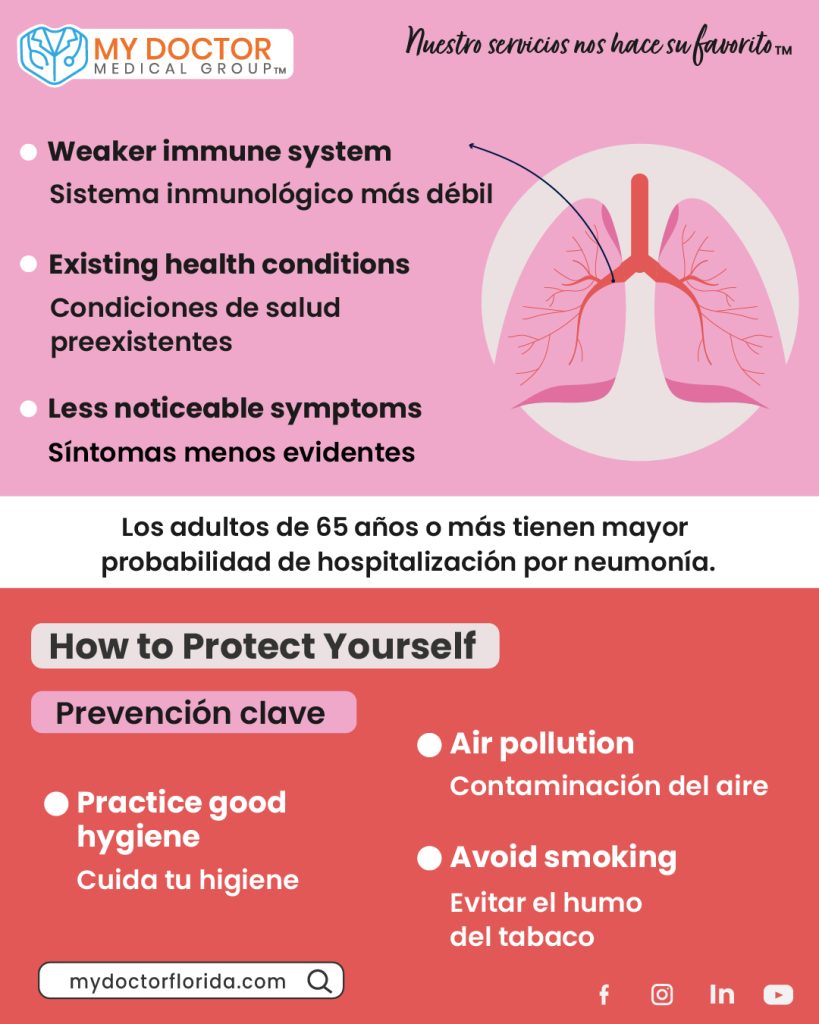
- With age the immune system becomes less efficient (“immunosenescence”), increasing the risk of severe infections.
- Seniors often have chronic conditions (such as diabetes, heart failure, chronic lung disease) that further increase the risk of pneumonia or its complications.
- The incidence of pneumonia and hospitalizations for pneumonia is much higher in older adults. For example, adults 65+ are more than ten times as likely to be hospitalized with pneumococcal pneumonia as those aged 18‑49.
Risk factors and warning signs for seniors | World Pneumonia Day
Key risk factors for seniors:
- Advanced age (65 and above).
- Chronic medical conditions: lung (COPD/asthma), heart, kidney, liver diseases, diabetes, weakened immune system.
- Smoking history, exposure to indoor/outdoor air pollution.
- Living in long‑term care facilities or community settings with higher exposure to pathogens.
Warning signs not to ignore:
- Persistent cough (with or without phlegm).
- Shortness of breath or faster breathing than usual.
- Chest pain when breathing deeply or coughing.
- High fever, chills, excessive sweating.
- Confusion, extreme fatigue or drowsiness (especially in seniors).
If any of these signs appear — especially in a senior or someone with risk factors — prompt medical attention is crucial.
Prevention: what seniors can do and how we support you | World Pneumonia Day
Key preventive measures:
- Pneumococcal vaccination: conjugate and polysaccharide vaccines protect against many strains of Streptococcus pneumoniae, a major cause of pneumonia.
- Recent guidelines from the CDC now recommend pneumococcal vaccination from age 50 for adults without other risk conditions.
- Healthy lifestyle: good nutrition, regular physical activity, avoid smoking, reduce exposure to air pollutants.
- Respiratory hygiene: cover coughs/sneezes, hand‑washing, avoid close contact with ill individuals.
- Proper management of chronic conditions: controlling diabetes, chronic lung disease, heart failure reduces risk of pneumonia and serious outcomes.
World Pneumonia Day: a moment to act
Each November 12, World Pneumonia Day highlights the global burden of pneumonia, and emphasises that many deaths are preventable.
For seniors, it is an opportunity to take action:
- Ensure your vaccines are up to date.
- Stay alert to changes in breathing, cough, or general health.
- Do not dismiss a respiratory infection as “just a cold”.
On this day, we encourage you to take a concrete step toward your lung health: book an appointment at our clinic and review your respiratory protection as a senior.
 English
 Spanish